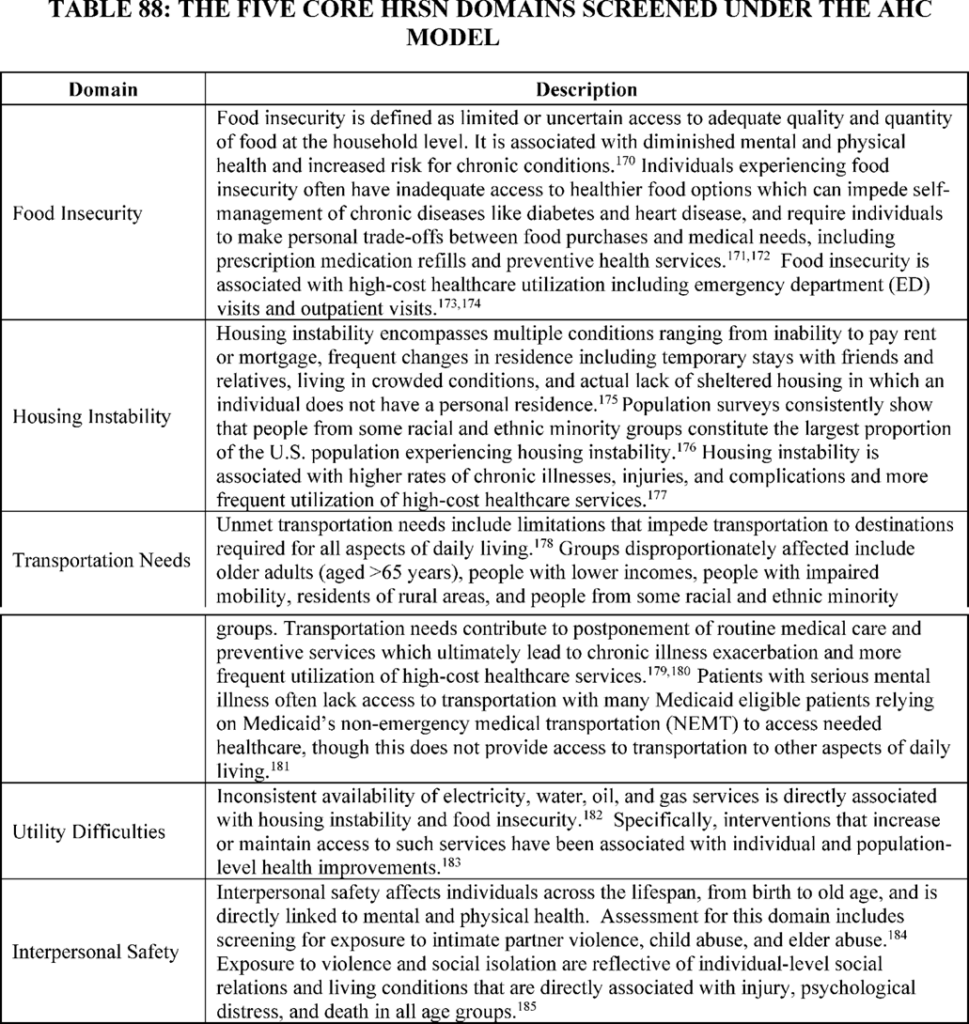
If you’ll recall, a couple of weeks ago, I reported on the Centers for Medicare & Medicaid Services (CMS) Proposed Rule for the social determinants of health (SDoH) in the outpatient settings, specifically Hospital Outpatient Departments (HOPDs), Rural Emergency Hospitals (REHs), and Ambulatory Surgical Centers (ASCs).
To recap, CMS has proposed in the 2025 Outpatient Prospective Payment System (OPPS) Rule an expansion of the SDoH initiatives for quality reporting, with a similar staged rollout to what we experienced during the Inpatient Prospective Payment System (IPPS) rule for the 2024 mandate. The same measures and processes used in hospitals for inpatients 18 and older are proposed to be incorporated into the Hospital Outpatient Quality Reporting (OQR), Rural Emergency Hospital Quality Reporting (REHQR), and Ambulatory Surgical Center Quality Reporting (ASCQR) programs.
Voluntary reporting will begin with the 2025 reporting period, followed by mandatory reporting in the 2026 reporting period/2028 payment or program determination.
Logistical Considerations for Implementation
Similar to the inpatient setting, the SDoH measure in outpatient settings will be calculated based on each outpatient encounter for patients 18 and older. Patients must be offered five specific Health-Related Social Needs (HRSN) domain questions related to personal safety, utilities, housing, transportation, and food insecurity during their care in a HOPD, REH, or ASC. The first measure will evaluate the proportion of patients who are offered the screening tool versus those who actually complete the questions. There are exclusions for those unable to complete or refusing to undergo the screening, which must be appropriately documented. CMS highly recommends that the tool be electronic.
Additionally, the Screen Positive Rate for SDoH measure will report on the percentage of patients who screen positive for one or more HRSNs. This data will be reported separately for each of the five HRSNs, allowing healthcare providers and policymakers to understand the prevalence of specific social risks in different care settings. The data will be reported annually. This will also provide continued data support for Z code capture.
Challenges in Operationalizing SDoH Screening
While this screening tool marks a critical step towards addressing the SDoH on a broader scale, there are legitimate concerns regarding how to operationalize this process when a patient screens positive – and determining who will follow up on those needs. Currently, HOPD encounters include lab, imaging, radiology, bedded outpatients, same-day surgery, physician offices, and infusion departments, to name a few. It will be a massive undertaking to determine how these questions will be provided to patients and how appropriate follow-up will be conducted when a patient responds positively to one of these questions.
To prepare for this rollout, HOPDs, REHs, and ASCs should start discussing the following:
- Mechanisms for incorporating SDoH Screening into the Registration Process: Consider integrating these questions into your patient portal, to be completed before or at the time of check-in. This will streamline data collection and quality reporting. HOPDs, REHs, and ASCs will need to assess all portals of entry to ensure that these questions are being provided for applicable patient encounters. It will be valuable to consider prior patient responses from previous encounters with an update-and-validate approach, rather than starting from scratch each time.
- Plan for Escalation and Triage: Develop a process for how organizations will respond to positive SDoH screenings. Something hospitals, and particularly case management departments, have learned from responding to the numerous positive screens on the inpatient side is that not all questions require immediate follow-up, nor is the patient always interested in assistance.
Consider including a question that asks if the patient is already receiving assistance for each need. The questionnaire should also include a question as to whether the patient would like to speak to someone further about their response. If the answer is no, follow-up may not be required, and should be documented as such. If the answer is yes, determine if the issue can be addressed via a phone call at a later date or if someone should be available to address the need during the visit.
Immediate action should be taken for concerns related to personal safety, while issues related to housing, utilities, food, and transportation could be routed to appropriate teams for timely but non-immediate follow-up. This approach could involve partnerships with community organizations, ambulatory care management departments, post-acute resource centers, or telehealth/phone-call outreach services, likely some type of case management outreach support.
Although we do have time to prepare, as we have seen from the inpatient SDoH initiative, using the voluntary reporting period if this ruling is finalized will be a key method for trailing various strategies to ensure appropriate outreach and follow-up occurs. As you can expect, I will continue to follow this ruling and see where CMS lands in their finalized determination.
Programming note:
Listen to senior healthcare consultant Tiffany Ferguson when she reports this story live during Talk Ten Tuesday today at 10 Eastern with Chuck Buck.