
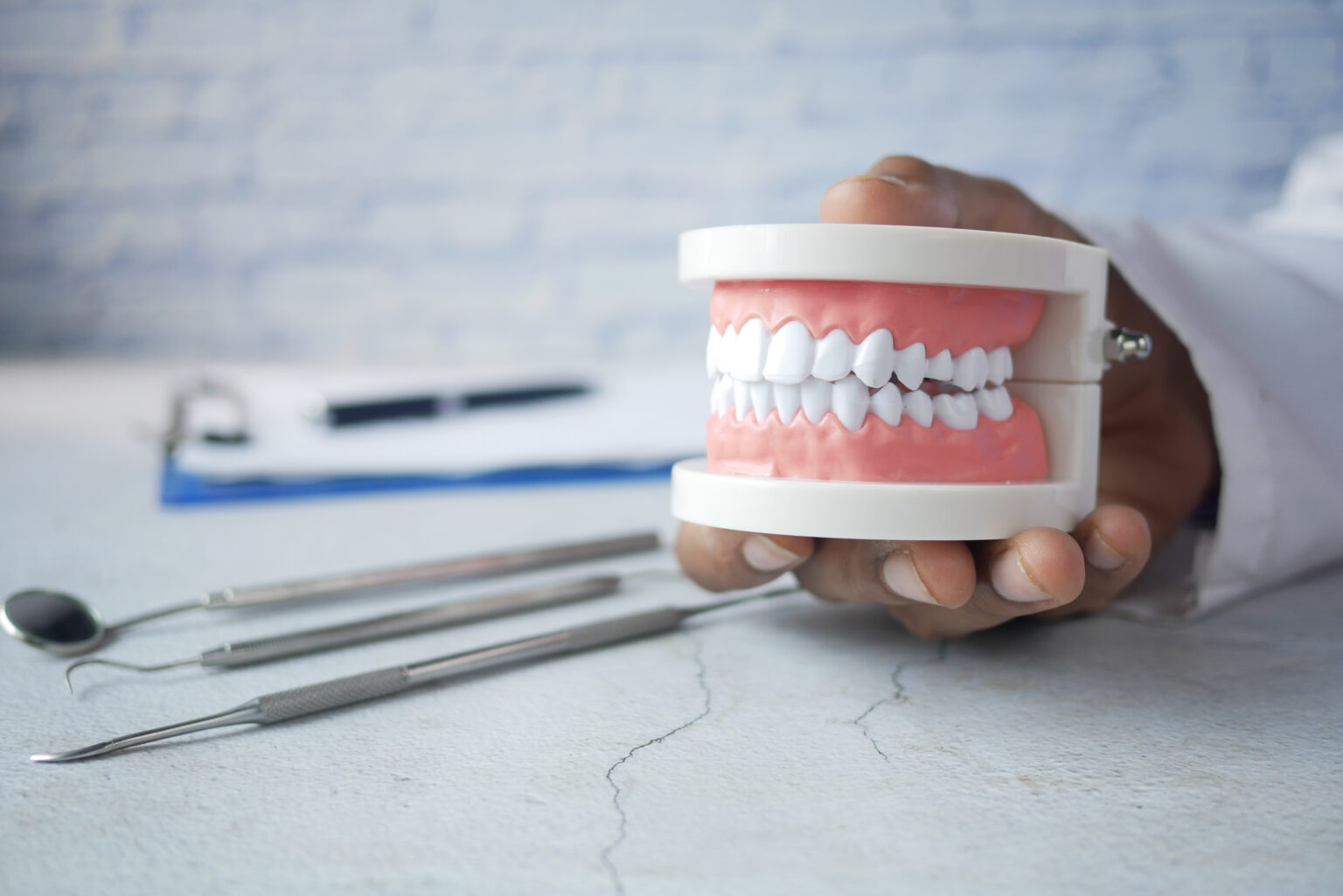
Cutting our Teeth in Dental Coding

Cutting our Teeth in Dental Coding

October is National Dental Hygiene Month, a great time to take a look at dental coding. For coders who assign ICD-10 codes, our first thought may be of those codes found at range K00-K08. As Coding Clinic from the fourth quarter of 2016 reminds us, there was an expansion of dental codes in ICD-10 in 2016, which included 22 new codes. It also noted that prior to that, diagnostic codes weren’t widely used in dentistry. However, due to some state Medicaid requirements, ICD-10 code assignment became necessary. The ADA (American Dental Association) notes that ICD-10-CM codes also help facilitate claim payment and coverage.

We are familiar with ICD-10 and CPT®, but did you know the ADA publishes and maintains a code set specifically for dental coding? Current Dental Terminology (CDT) is the specific code set for reporting dental procedures. There are about 800 CDT codes currently. CDT will update on Jan. 1, 2026 (just like CPT!) with 31 new codes, six deletions, and 14 revisions. The ADA has a process similar to what we recently reviewed with our ICD-10 updates. They have a Council on Dental Practice (CDBP) that established a Code Maintenance Committee (CMC). The CMC reviews requests for code changes, ensuring all stakeholders have a voice – sound familiar?  

The CDT code set is divided into chapters – again, similar to which we are familiar. There are 12 chapters of codes, based on the type of dental service provided: 

Diagnostic;
Preventive;
Restorative;
Endodontics;
Periodontics;
Prosthodontics;
Oral and Maxillofacial Surgery;
Orthodontics;
Adjunctive General Services;
Anesthesia;
Adjunctive Services; and
Imaging.

The CDT codes themselves are five characters long. They are alphanumeric, all starting with the letter D followed by 4 numbers. CDT is the Health Insurance Portability and Accountability Act (HIPAA) standard for coding and reporting dental procedures. 

Coding professionals who work in the dental world have their own credentials and organization as well. The American Dental Coders Association was founded in 2006 to represent professionals in dental coding. They have two certificate programs that offer credentials in the field: the Certified Dental Coder (CDC) and the Certified Dental Billing Specialist (CDBS).  You must be a member of the ADCA in order to take either certification exam. In addition, to become a CDC, you must also have two years of experience or complete an online course. Membership to ADCA includes access to Ask-the-Coder, a knowledge base whereby coders can submit questions on real-world coding scenarios. 

The ADCA website references U.S. Bureau of Labor statistics and national employment forecasts noting that jobs in healthcare billing and coding across the board are projected to increase by 8 percent through 2032. The ADCA further notes the expansion of services by dental practices, tighter regulatory oversight, and an increase in tele-dentistry as forces supporting the increased need for certified dental coders.  Regardless of where they practice, coding professionals will continue to be vital members of the healthcare team.

Facebook
Twitter
LinkedIn

Christine Geiger, MA, RHIA, CCS, CRC

Chris began her health information management career in 1986, working in hospitals and as a consultant. With expertise in ICD-10 coding, audits, and education, she has contributed to compliance reviews and coding programs. She holds a Master's from Washington University, a B.S. from Saint Louis University, and has taught coding at Saint Louis University. Chris is certified in HCC risk-adjusted coding and is active in health management associations.

Related Stories

Preparing for CJR-X

Preparing for CJR-X

The Centers for Medicare & Medicaid Services (CMS) recently provided an overview of the upcoming Comprehensive Care for Joint Replacement Expanded Model (CJR-X). Thank you

Read More

Leave a Reply

Please log in to your account to comment on this article.

Featured Webcasts

Inpatient Ulcers and Gangrene: Avoid FY 2027 ICD-10-CM Coding, Sequencing, and Documentation Errors

Avoid costly inpatient coding errors involving ulcers and gangrene. This practical FY 2027 ICD-10-CM webcast clarifies pressure injury staging, non-pressure ulcer severity, diagnosis sequencing, documentation requirements, and POA reporting. Through real-world cases, gain the confidence to make defensible coding decisions, reduce denials, strengthen compliance, and support accurate reimbursement.

November 4, 2026

One Chart, Five Truths: How CDI Prevents the Same Diagnosis from Becoming Five Different Outcomes

What happens when everyone reviews the same chart, but reaches a different conclusion? In this case-based clinical documentation integrity (CDI) webcast, Penny Jefferson examines how documentation involving clinical support, timing, causation, linkage, and terminology can produce very different outcomes for ICD-10 coding, reimbursement, quality, risk adjustment, medical necessity, denials, and compliance. Using cases involving postoperative respiratory failure, severe malnutrition, and encephalopathy, you’ll learn the practical CLEAR framework to help attendees learn to evaluate whether a diagnosis is codeable, consistent, specific, reportable, and ultimately defensible across the different teams and systems that rely on the medical record.

September 30, 2026

Mastering Spinal Fusion Coding for Inpatient Facilities: ICD-10-PCS Precision, Documentation, and MS-DRG Impact

Spinal fusion cases are among the most complex inpatient procedures to code, where even minor ICD-10-PCS errors can affect MS-DRG assignment, reimbursement, compliance, and audit outcomes. This practical webcast provides a step-by-step framework for interpreting operative reports, assigning accurate ICD-10-PCS codes, recognizing documentation gaps, and confidently coding complex fusion procedures. You’ll leave with practical tools that improve coding accuracy, reduce denials and audit risk, and strengthen documentation-driven reimbursement decisions.

July 29, 2026

Trending News

Featured Webcasts

Radiation Oncology Fundamentals: Coding, Billing & Compliance for Hospital Outpatient & Professional Services

Now Available On Demand

Join Michael Calahan, PA, MBA for this radiation oncology coding and compliance webcast as he explains the fundamentals of coding, billing, reporting, and documentation for hospital outpatient and professional services. Learn how the 2026 radiation therapy coding changes affect current practices, how to distinguish technical and professional services, and how to address bundling, units, frequency, modifiers, and documentation requirements. Michael will also help you identify radiation oncology coding and billing vulnerabilities that could lead to denials, overpayments, repayment demands, or federal audit exposure.

October 20, 2026

Trending News

Prepare for the 2025 CMS IPPS Final Rule with ICD10monitor’s IPPSPalooza! Click HERE to learn more

Get 15% OFF on all educational webcasts at ICD10monitor with code JULYFOURTH24 until July 4, 2024—start learning today!

This Memorial Day, we honor those who gave all for our freedom. Take 20% off sitewide through May 29 with code MEMORIAL26 at checkout

CYBER WEEK IS HERE! Don’t miss your chance to get 20% off now until Dec. 1 with code CYBER25

CYBER WEEK IS HERE! Don’t miss your chance to get 20% off now until Dec. 2 with code CYBER24

















