Innovative endovascular techniques are driving major changes in lower extremity revascularization coding, adding complexity for even seasoned professionals. This is only part of intricate massive overhaul landscape that coders and compliance professionals must navigate in 2026. This month, we break down Category III codes 0505T and 0620T, highlighting what each procedure includes, how they differ, and critical reporting restrictions to avoid denials. The eight new intravascular lithotripsy (IVL) codes are also introduced, explaining how code selection varies by vessel location and additional interventions.
Analyzing Codes 0505T and 0620T
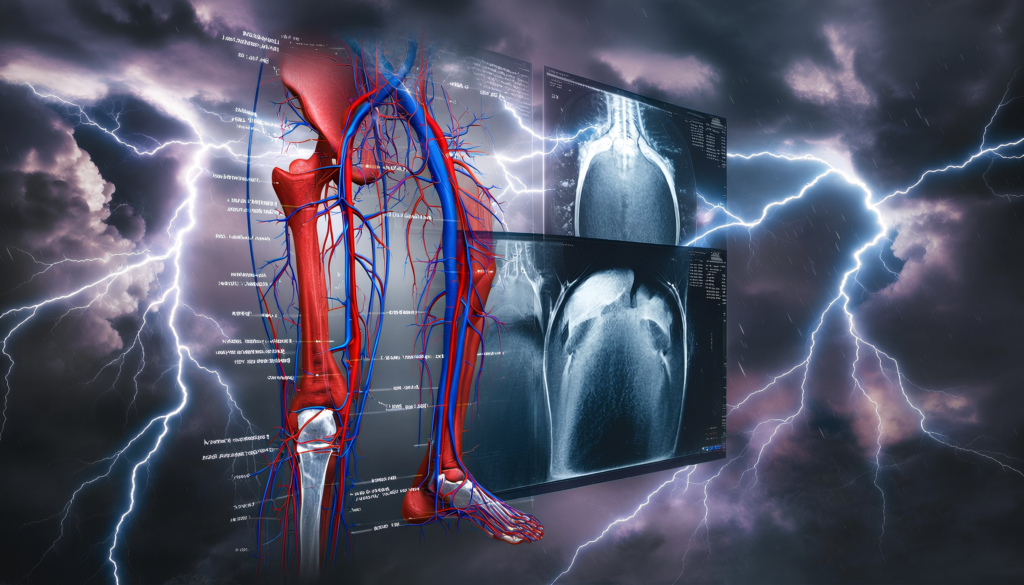
Category III code 0505T was created for endovenous revascularization of the superficial femoral artery (SFA) and/or the popliteal artery, using a crossing device to go out of the artery above a blockage into the adjacent vein, then crossing back from the vein to the artery below the blockage. Coders should note that stent grafts are placed through the tract to bypass a heavily calcified occlusion.
The code encompasses the following:
Access and antegrade catheterization of the ipsilateral lower extremity artery
Separate access and antegrade catheterization of a lower extremity vein
Angioplasty of arteries and/or veins, additional stenting, or atherectomy
Ultrasound guidance for vascular access
Diagnostic arteriography and venography of the treated leg
All imaging guidance for the procedure
Vessel closures
Code 0620T, on the other hand, details a procedure in which an arteriovenous anastomosis is created in the lower extremity proximal to an area of disease in the tibial or peroneal veins. Our experts explain that, through the anastomosis, the distal portion of the target vein is repurposed to act as an artery, providing distal perfusion of oxygenated blood to the foot. This is completed by destruction of the vein’s valves. Stent grafts are placed to establish a permanent conduit for blood flow.
Like 0505T, 0620T includes the following:
Ipsilateral selective arterial and venous catheterization of the treated leg
Ipsilateral diagnostic imaging of the lower extremity arteries
Related imaging supervision and interpretation
There are some stipulations that professionals should note when reporting these codes to ensure accurate reimbursement. Coders should be cautious not to report 0505T with 37238, 37239, 37248, 37249, 37267, 37268, 37269, or 37270 within the femoral-popliteal segment. Meanwhile code 0620T must not be reported in conjunction with 37238, 37239, 37248, 37249, or 37280- 37295 within the tibial-peroneal segment.
Unlocking the Eight Codes for Intravascular Lithotripsy (IVL)
For 2026, as part of the historic overhaul, eight codes were created for outpatient hospital billing of intravascular lithotripsy (IVL). Intravascular lithotripsy uses a special balloon catheter containing integrated lithotripsy technology. This balloon enables the fracturing of calcifications within the vascular tissues using the principles of kidney stone treatment. The following four codes (C9764–C9767) are reported for intravascular lithotripsy in lower extremity arteries, other than the tibial or peroneal arteries.
C9764
Revascularization, endovascular, open or percutaneous, lower extremity artery(ies), except tibial/peroneal; with intravascular lithotripsy, includes angioplasty within the same vessel(s), when performed
C9765
Revascularization, endovascular, open or percutaneous, lower extremity artery(ies), except tibial/peroneal; with intravascular lithotripsy, and transluminal stent placement(s), includes angioplasty within the same vessel(s), when performed
C9766
Revascularization, endovascular, open or percutaneous, lower extremity artery(ies), except tibial/peroneal; with intravascular lithotripsy and atherectomy, includes angioplasty within the same vessel(s), when performed
C9767
Revascularization, endovascular, open or percutaneous, lower extremity artery(ies), except tibial/peroneal; with intravascular lithotripsy and transluminal stent placement(s), and atherectomy, includes angioplasty within the same vessel(s), when performed
Codes C9772–C9775 will be reported by the outpatient hospital department for intravascular lithotripsy in the tibial or peroneal arteries.
C9772
Revascularization, endovascular, open or percutaneous, tibial/peroneal artery(ies), with intravascular lithotripsy, includes angioplasty within the same vessel(s), when performed
C9773
Revascularization, endovascular, open or percutaneous, tibial/peroneal artery(ies); with intravascular lithotripsy, and transluminal stent placement(s), includes angioplasty within the same vessel(s), when performed
C9774
Revascularization, endovascular, open or percutaneous, tibial/peroneal artery(ies); with intravascular lithotripsy and atherectomy, includes angioplasty within the same vessel(s), when performed
C9775
Revascularization, endovascular, open or percutaneous, tibial/peroneal artery(ies); with intravascular lithotripsy and transluminal stent placement(s), and atherectomy, includes angioplasty within the same vessel(s), when performed
The hospital will choose the appropriate code according to the arteries treated and whether additional treatments, such stent placement or atherectomy, are performed. All eight codes include angioplasty within the same vessel, when performed. Understand that the code description does not include catheter placement. With these nuances and expert analysis, coders can promote accuracy for success in 2026.
⚠️Your IR Coding Remains Under Threat, Creating Significant Risk to Your Bottom Line. These Are NOT All the Tips and Tricks Necessary for Success.⚠️
With every dollar of reimbursement counting more than ever in the face of payment decline and complex changes, it’s imperative to make sure your CPT® coding is correct and compliant. Master more coding topics and break down the complexity with our 2026 IR Masterclass: Lower Extremity Interventional Radiology Coding webcast on February 11, 2026 at 11:00 am CT. This webcast is an essential training tool for both audio and visual learners.
2026 has arrived, and for many coding professionals, the lower extremity revascularization overhaul is quickly shifting from a future concern in 2025 to a day-to-day
A storm of coding and compliance changes will sweep through interventional radiology and radiology, creating challenges for coding and compliance professionals alike. Reimbursement is especially