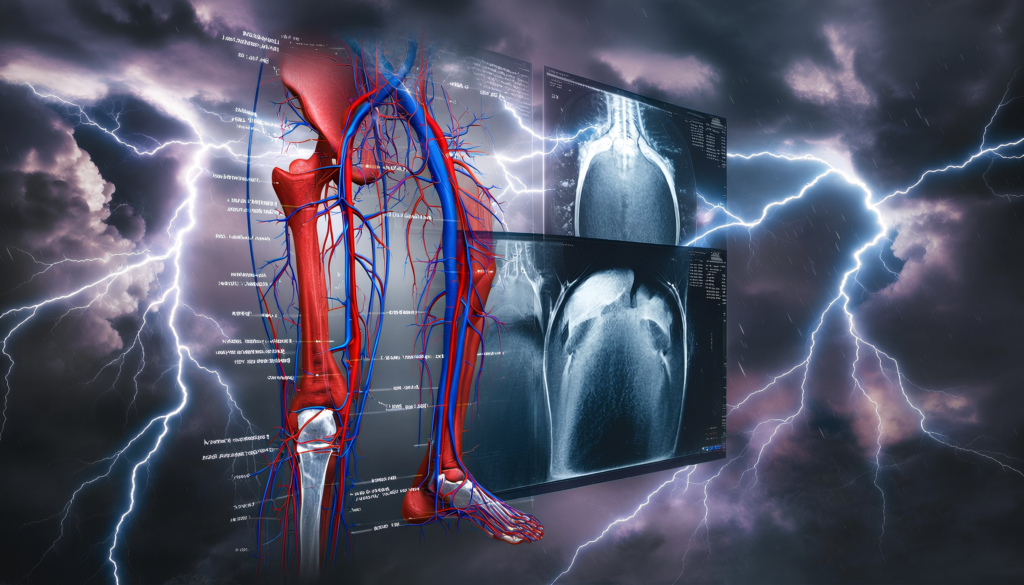
In a landmark decision, interventional radiology is bracing for a storm of historic change, as the new lower extremity revascularization code set for occlusive disease will carry waves of consequences for professionals. The original code set ballooned from 16 codes to 46, with territories expanding from three to four. Interventional radiology will brace for a series of challenges when it comes to grasping the true complexity and scope of the transformation. With this multitude of changes, we are launching a three-part series to unlock insider professional tips and serve as your trusted safe harbor in a sea of sweeping change.
Beware of Significant Challenges and Breaking Down the Basics
Effective January 1, 2026, previous codes 37220–37235 will no longer be active. CPT® is eliminating this series and replacing it with new codes 37254–37299. According to Laura Manser, CPC, CPCO, CDEO, CPMA, CEMC, CIRCC, RCC, a nationally recognized subject matter expert in radiology, interventional radiology, and nuclear medicine, the monumental coding changes present a series of significant challenges for coders and compliance professionals heading into 2026. She expressed the underlined concerns, stating, “The biggest challenge is going to be the learning curve. Going from 16 codes to 46 is a massive shift, and coders, physicians, and billing staff all need to get up to speed simultaneously. There’s going to be a period when people are uncertain, coding errors increase, and claims get held up.
The second challenge is documentation inconsistencies. If physicians don’t adapt their documentation to clearly delineate territories and lesion complexity, coders are going to struggle to assign the right codes. That creates compliance risk and potential revenue loss.
Third, I’m concerned about payer understanding and audits. When you make a change this sweeping, payers don’t always update their systems or train their reviewers quickly enough. We could see increased denials simply because the new code set isn’t fully integrated on the payer side, or auditors don’t understand the new structure and start questioning claims that are actually correct.”
This series describes lower extremity endovascular revascularizations performed percutaneously and/or through an open surgical exposure for occlusive disease. These codes include the following key components:
- Accessing and selectively catheterizing the artery
- Crossing the lesion
- Performing the endovascular intervention
- All imaging for intraprocedural guidance including radiological supervision and interpretation directly related to the intervention performed to document completion of the intervention.
- To document completion of the procedure
- Embolic protection if used; and closure of the arteriotomy by pressure and application of an arterial closure device or standard closure of the puncture by suture.
CPT identified challenges and created the lower extremity revascularization code directives to differentiate the types of lesions:
- A straightforward lesion is considered a stenosis.
- A complex lesion is considered an occlusion.
Starting in 2026, the arteries will be divided into four unique territories:
- Iliac – three arteries (common iliac, external iliac, internal iliac) (37254–37262)
- Common femoral/popliteal – two arteries (common femoral/profunda femoris and superficial femoral/popliteal) (37263–37279)
- Tibial and peroneal – three vessels (anterior tibial, posterior tibial, and peroneal) (37280–37295)
- For coding purposes, the tibioperoneal trunk is considered part of either the posterior tibial or peroneal artery and is not a separate vessel unless it is the only vessel treated.
- Inframalleolar – two arteries (dorsalis pedis and plantar) (37296–37299)
Understand that the inframalleolar territory includes the dorsalis pedis and plantar arteries. Note that the pedal arch is considered part of the dorsalis pedis or plantar arteries and not a separate vessel. The exception to this rule is when it is the only vessel treated.
What actions should be taken if the service was performed attempting to traverse an occlusive lesion in the lower extremity, and it is unsuccessful? In this instance, code for the catheterization and diagnostic angiogram. For example: contralateral access, unsuccessful attempt at crossing a lesion in the anterior tibial artery, report codes 36247 and 75710.
Separatley Reportable Circumstances Worth Noting
Do rules exist for separately reportable services? There are series of key notes professionals should take into mind when evaluating whether to report specific codes separately. First, know that intravascular ultrasound (IVUS) (37252, 37253) is separately reportable with lower extremity revascularization codes.
Diagnostic angiograms are separately reportable with an intervention at the same session when:
- No prior catheter-based angiographic study is available, and a full diagnostic study is performed, and the decision to intervene is based on the diagnostic study, or
- A prior study is available, but as documented in the medical record:
- The patient’s condition with respect to the clinical indication has changed since the prior study, or
- There is inadequate visualization of the anatomy and/or pathology, or
- There is a clinical change during the procedure that requires new evaluation outside the target area of intervention.
History is key to understanding the clinical story, and professionals should keep in mind a crucial point in the NCCI Policy Manual: if the patient had a previous diagnostic catheter-based angiogram or CTA, the above guidelines must be met. Catheterization codes are not separately reportable with revascularization codes, with or without a diagnostic angiogram, when the intervention and angiogram are performed from the same access. However, the catheterization codes may be reported separately if the diagnostic angiogram was done from a separate access than the intervention.
Finally, mechanical thrombectomy and/or thrombolysis in the lower extremity arteries are separately reportable with lower extremity interventions.
Next month, we will explore the new code set in more depth with part II of our exclusive series.
⚠️Your IR Coding Remains Under Threat, Creating Significant Risk to Your Bottom Line. These Are NOT All the Tips and Tricks Necessary for Success.⚠️
With every dollar of reimbursement counting more than ever in the face of payment decline and complex changes, it’s imperative to make sure your CPT® coding is correct and compliant. Master more coding topics and break down the complexity with our 2026 Radiology Coding Update webcast on December 17, 2025 at 11:00 am CT (120 minutes). This webcast is an essential training tool for both audio and visual learners.